
Carbon Offsetting Solutions
Carbon Offsetting Solutions
Carbon Offsetting refers to the practice of compensating for greenhouse-gas (GHG) emissions produced in one place by funding equivalent climate-positive activities elsewhere such as emission-reduction or carbon-removal projects.
Essentially, you calculate the amount of CO₂ (or equivalent GHGs) generated by an activity (for example, a factory’s emissions, air travel, energy use). For any emissions that cannot be immediately avoided, carbon offsetting allows individuals or organisations to “neutralize” their footprint by purchasing carbon credits — each representing one metric ton of CO₂ reduced or removed elsewhere.
How Carbon Offsetting Works The Process
- Calculate emissions: Determine the greenhouse-gas emissions from your activity this could be energy consumption, transportation, manufacturing, etc.
- Reduce what you can: Before offsetting, organisations should first attempt to cut emissions internally (energy efficiency, cleaner processes, renewables, etc.). Offsetting is for residual emissions that are hard to eliminate.
- Purchase verified carbon credits: For the remaining emissions, purchase carbon credits from certified projects these may involve reforestation, renewable energy, energy-efficiency upgrades, carbon capture, or other climate-mitigation efforts.
- Retire the credits: Once credits are bought, they are “retired” or taken off the market so that they can’t be reused this ensures that each credit corresponds to a unique emission reduction.
- Claim carbon neutrality or offset emissions: With credible offsetting, companies or individuals can claim that they have balanced their emissions often described as being “carbon neutral.”
Where Carbon Offset Projects Come From
Carbon offset projects generally fall into two major categories:
- Emission-reduction projects: projects that avoid emissions from being generated: renewable energy installations (solar, wind, hydro), energy-efficiency upgrades, reducing reliance on fossil fuels, clean-energy infrastructure.
- Carbon-removal / sequestration projects: initiatives that remove CO₂ from the atmosphere: reforestation or afforestation, soil carbon management, sustainable forestry, carbon capture and storage (CCS) or emerging removal technologies.
- Through these projects, carbon offsetting channels investments from companies or individuals to areas where carbon reduction or sequestration is most cost-effective or impactful.
Benefits of Carbon Offsetting
- Makes climate action feasible for hard-to-abate emissions: For some industries or activities (manufacturing, long-haul flights, supply-chain emissions), fully eliminating emissions immediately is difficult. Offsetting helps bridge the gap while long-term decarbonization strategies are rolled out.
- Mobilises finance for climate-positive projects: Offsetting generates funding for renewable energy, reforestation, clean-tech or carbon-sequestration projects often in regions where investment otherwise may be scarce.
- Encourages a global perspective on emissions: Because emissions are global greenhouse gases mix in the atmosphere reducing emissions anywhere benefits the climate everywhere. Offsetting leverages that global commons logic.
- Supports corporate sustainability goals and climate commitments: Organisations aiming for net-zero, carbon-neutrality or ESG compliance can use offsetting as part of their strategy provided it’s done responsibly and transparently.
- Promotes awareness and responsibility: For individuals, buying offsets for flights, travel or consumption can raise consciousness about their carbon footprint and encourage more sustainable behaviour.
Caveats, Criticisms & What to Watch Out For
Carbon offsetting is not a silver bullet it works best when seen as one tool among many. There are important limitations and criticisms:
- Risk of “business-as-usual” mentality / delay in actual decarbonization: If companies rely heavily on offsets without reducing their own emissions, offsetting becomes a license to pollute rather than a transition tool.
- Quality and integrity of offset projects vary: Not all offset projects deliver what they promise. Issues like “additionality” (would the project have happened anyway?), permanence (will carbon remain stored long-term?) and possible “leakage” (emissions shift somewhere else) are real concerns.
- Lack of regulation / transparency in voluntary markets: Voluntary carbon markets are often less regulated than compliance-based markets, which can lead to poor oversight, fraud, double counting or “over-crediting.”
- Offsets don’t replace the need for emission reductions at source: For genuine climate impact, organisations should strive to reduce emissions directly energy efficiency, clean energy adoption, process changes relying on offsetting only for residual emissions.
- Criticism from climate-justice and environmental groups: Some argue offsetting can perpetuate inequality (rich polluters offset via projects in poorer regions) and distract from systemic changes needed to phase out fossil fuels.
- Why Carbon Offsetting Still Matters
Despite its limitations, carbon offsetting remains an important instrument in the toolbox for climate action especially when combined with real emissions reductions and careful project selection. It helps channel capital to climate-positive projects, unlocks potential for sustainable development, and offers a pragmatic way for companies and individuals to take responsibility for unavoidable emissions.
To be effective and credible, offsetting must be:
- Backed by transparent, reliable data and third-party verification.
- Focused on high-quality projects with demonstrated emission reductions or carbon sequestration, ideally with co-benefits (biodiversity, social impact).
- Used as a complementary measure not a substitute to internal decarbonization efforts.
When these conditions are met, carbon offsetting can help accelerate the global transition toward a lower-carbon future — while giving organisations and individuals an avenue to contribute to climate mitigation right now.
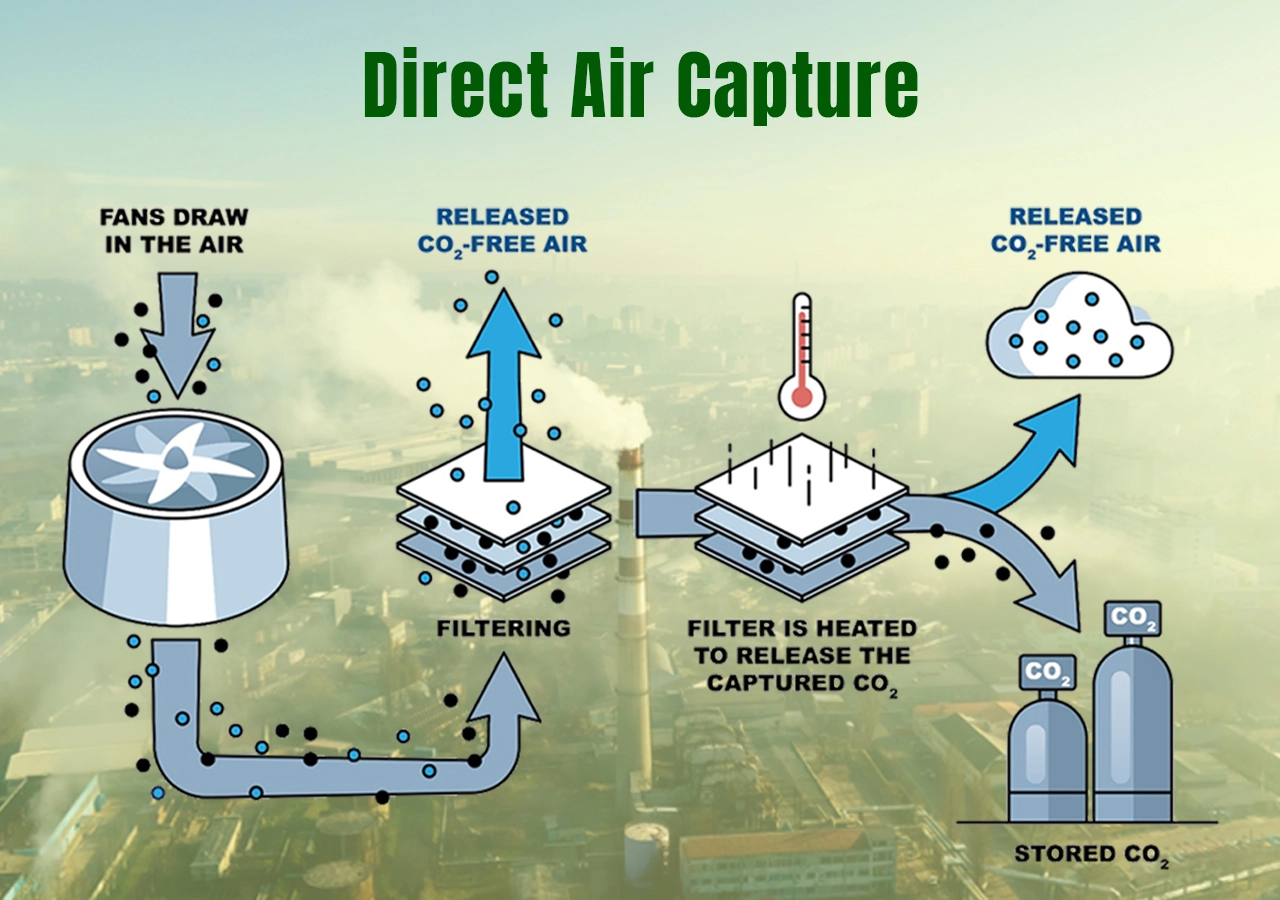
Direct Air Capture
DAC is an emerging negative emissions technology that removes CO₂ directly from the atmosphere. While promising, it faces challenges in scalability, energy use…
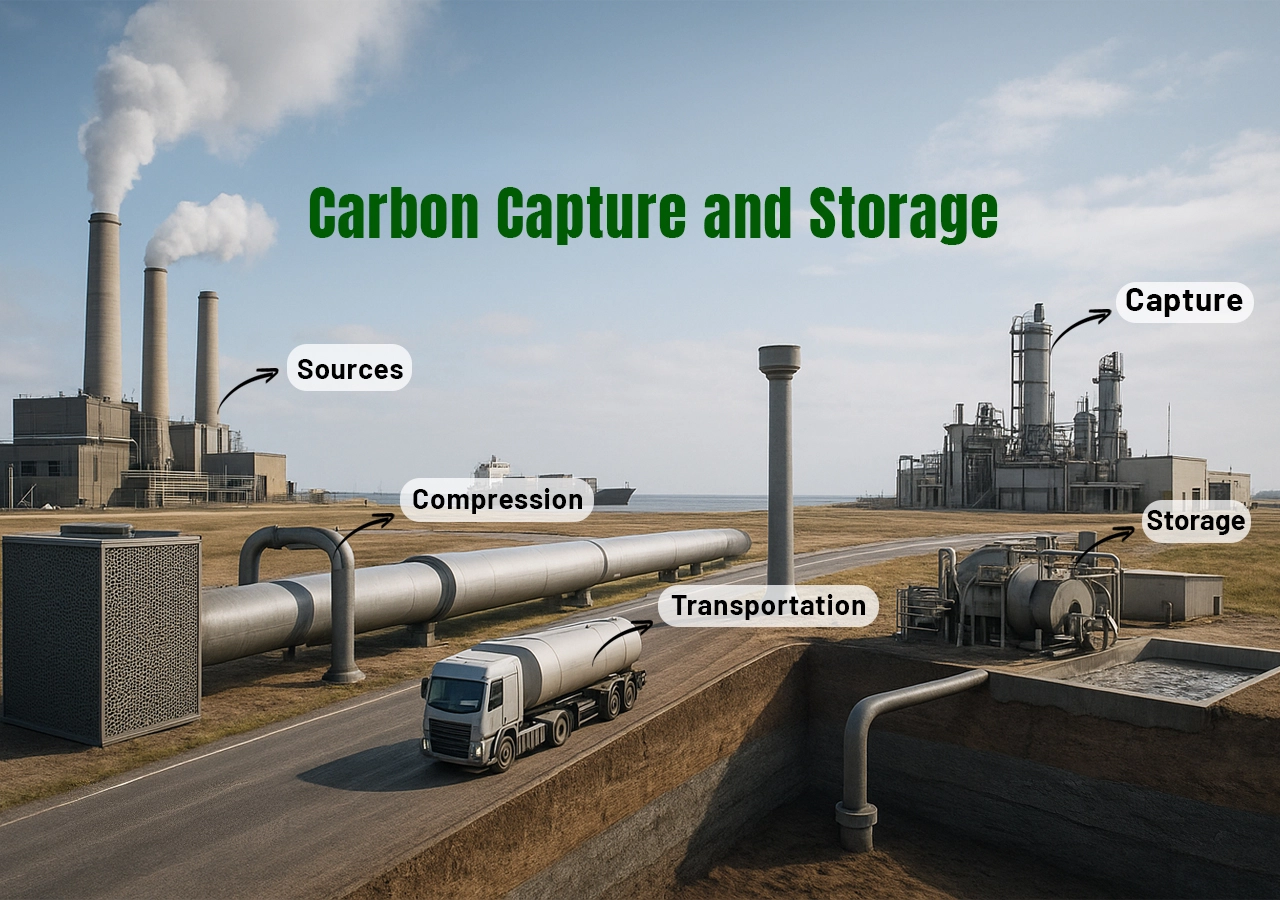
Carbon Capture and Storage
CCS captures CO₂ emissions from large point sources (e.g. power plants, industries) and stores it underground. It is a key technology for hard-to-abate sectors