
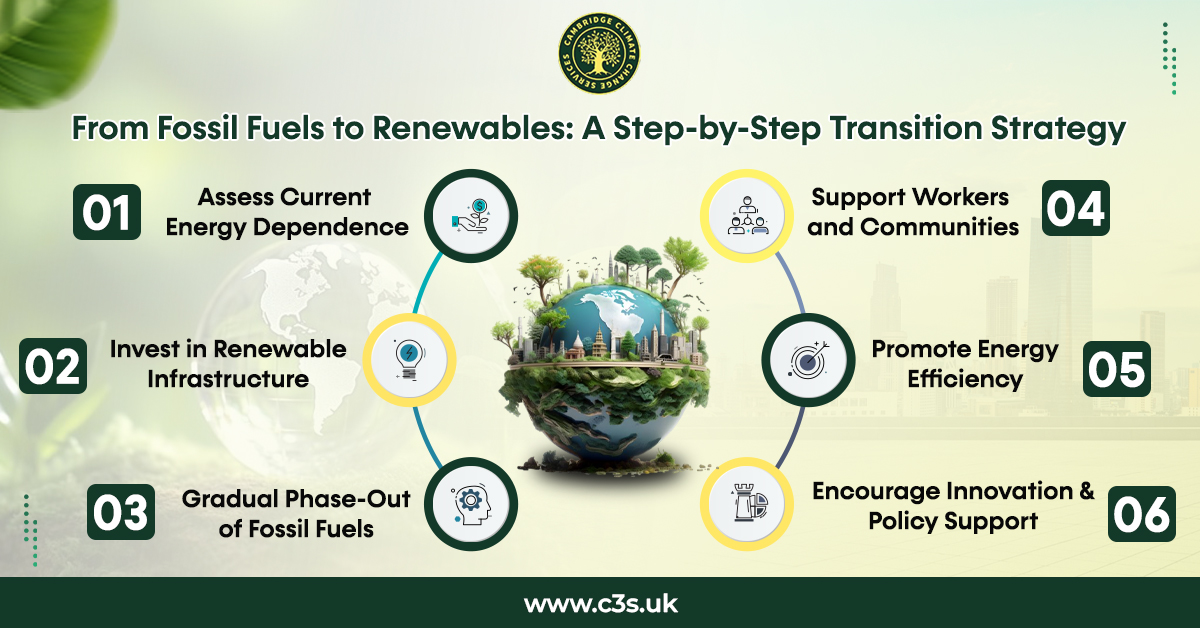
From Fossil Fuels to Renewables: A Step-by-Step Transition Strategy
Changes everywhere in the energy systems of the world due to the active role being played by sustainable investment advisors, and other related experts. For more than a century, coal, oil, and natural gas have formed the backbone of the fossil fuel energy source for industry, transport, and homes.
The price that such dependency pays to the environment, the increase of greenhouse gas emissions, air pollution, and climate change. It indicates that a cleaner and more sustainable energy future is essential.
The transition from a fossil-fuel based economy to renewable energy must be seen not as a matter of technology but rather as an economic, social, and environment-related necessity. The conversion must therefore be rational, with a primary focus on the security of energy supply and environmental protection.
Why Is the Transition Required?
A substantial part of the global carbon emissions comes from fossil fuels. These carbon dioxide, sulfur dioxide, and other gases that produce a health hazard release directly into the atmosphere, causing global warming.
As per sustainable investment advisors, it is these emissions that cause serious health problems, including respiratory diseases and premature deaths. At the same time, fossil fuels are finite resources; hence, as the reserves deplete, extraction becomes ever more expensive and damaging to the environment.
Step by Step Guide on Fossils Fuels to Renewables Fuels Transition
Step 1: Assess Current Energy Dependence
The primary transition step associated with fossil fuel dependency is dependency analysis across the sectors. Types of consumption include electricity generation, transportation, manufacturing, and household use. Governments and organizations need to identify where high insecurities exist on fossil fuel use and what potential alternatives exist.
For instance, most electricity is generated from coal-fired power plants of the region whereas diesel and petrol are used to a greater extent in transport. With the dependence of fossil fuels mapped thus, policymakers would be able to design targeted strategies for displacing such fuels instead of bent on the broad-brush application of one recommended solution for all.
Step 2: Invest in Renewable Infrastructure
According to sustainable investment advisors, when there is a clear baseline, the next would be the investment in infrastructure for renewable energy in terms of solar, wind, hydroelectric, or bioenergy construction. In most countries, rooftop solar and small wind turbines would help, on the one hand, to decentralize the power production.
Investing is not simply a query about equipment installations. For the investment improvement, it is even enhancing the transmission lines, adding on building energy storage devices, such as batteries, and smart grids that would balance an ever-changing renewable energy supply.
Step 3: Gradual Phase-Out of Fossil Fuels
If fossil fuel industries are shut down all at once, it might cause economic disruptions and energy shortages. Hence a gradual transition is needed. Governments should set hard deadlines for the reduction of coal, oil, and gas while increasing renewable energy capacity.
For example, older and less efficient coal plants could be retired first as cleaner energy sources take their place.
Step 4: Support Workers and Communities
It is the economy of millions of people that favors fossil fuel industries. Therefore, to have a truly successful transition, they have to be included rather than abandoned. Some training or upskilling programs can allow the workforce to shift to renewable energy, energy efficient programs, and other areas.
Step 5: Promote Energy Efficiency
It is not sufficient to have renewable energy sources; the conditioning of reduced overall energy consumption is important. Sustainable investment advisors emphasize that many power demands can be reduced through energy efficiency measures such as better insulation, LEDs, appliances that consume less energy, and vehicles with optimum fuel efficiency.
Step 6: Encourage Innovation and Policy Support
Strong government policies create an impetus in fast tracking a transition. The provision of tax credits, low-interest loans, and grants facilitates renewable projects as much as it also funds research and development in technologies, including battery storage, green hydrogen, and offshore wind.
Conclusion
The move from fossil fuels to renewable energy is a journey, not merely an event. By examining energy consumption patterns now and building renewable power infrastructure, we can do well for the future. By responsibly phasing out fossil fuels, extending assistance to workers, enhancing efficiency, and inculcating innovation. Societies can bring into existence a less polluting and secure energy future.
Sustainable investment advisors stress that this transition way helps the environment while also bringing growth in the economy and jobs and laying a foundation for energy independence. The right approach can ensure a confident transmission of the world from an exhausted fossil fuel past to an everlasting renewable-powered future.









About Post Author