How Climate Risk Impacts Corporate Valuation and Financing?
Climate change has shifted from the periphery of corporate strategy right to the heart of financial decision-making. But what once was regarded as a long-term environmental problem is now something that corporations can measure on their balance sheets and bank accounts.
The climate has become an easily quantifiable financial variable, shaping how companies allocate capital, investors price risk and lenders make credit decisions.
Today, the risks of climate change are beginning to determine corporate value and financial strategies in ways few people would have anticipated even a decade ago. In all this background, climate risk assessments for business have become vital.
Climate Risk Is a Part of Every Financial Risk
There are broadly two types of climate risk:
Physical Risks:- flood, heat and drought damage as well and supply chain disruptions.
Transition Risks:- regulation, carbon pricing, technology and investor expectations progressing.
Both kinds introduce uncertainty about future cash flows. And in finance there is nothing like uncertainty to change everything. But when income streams and expenses become erratic, the models change. Discount rates rise. Risk premiums increase. Access to capital tightens.
In other words, climate exposure increasingly has a quantifiable impact on firm value. Companies can reduce these risks with the help of climate risk assessments.
Why Are Companies Changing How They Allocate Capital?
There is an intriguing transformation going on within corporate balance sheets. In the old days, non-financial companies invested excess funds into financial commodities like short term securities, investment portfolios and even other financial instruments to try and generate better returns or manage cash flows. The practice, known as financialisation, gave them flexibility and quick returns.
But the climate is changing that order.
Companies with high climate risk have reduced their financial asset accumulation. They’re funneling capital elsewhere all right:
- Reaching out to climate risk assessments experts
- Infrastructure upgrades
- Supply chain diversification
- Research and development
- Renewable energy investments
- Operational resilience
This is part of a move toward more defensive, longer-term financial strategy. The more the climate becomes uncertain, the more companies seek stability rather than speculative financial returns.
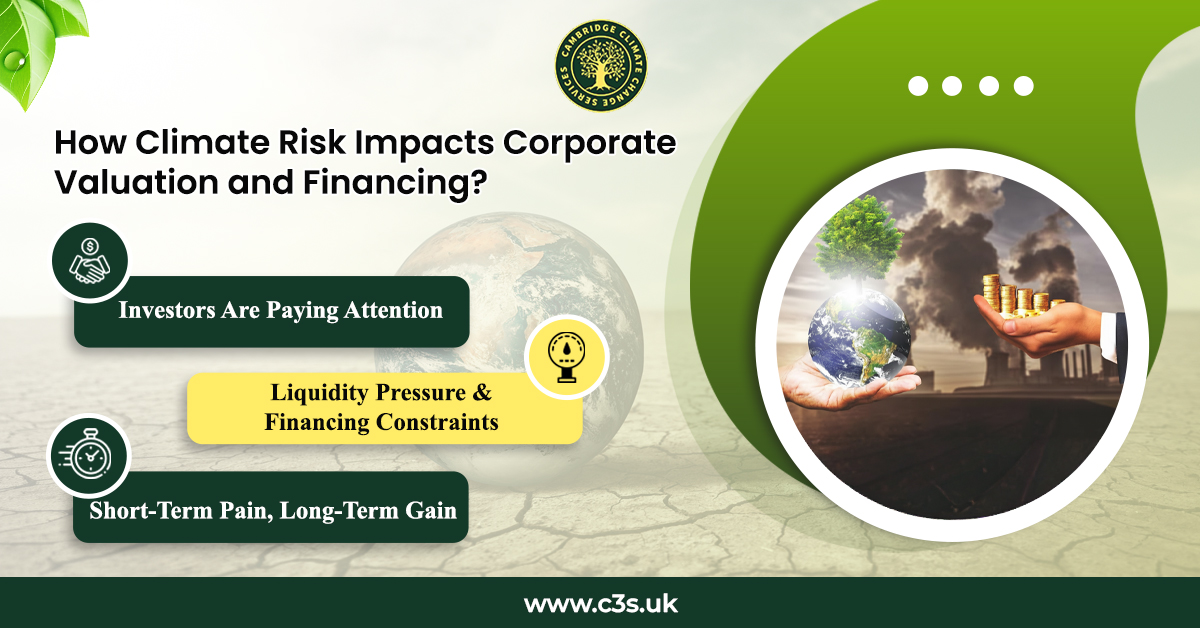
Investors Are Paying Attention
Climate benchmarks are being incorporated into the decisions of institutional investors. Asset managers increasingly evaluate:
- Carbon exposure
- Transition readiness
- Physical risk vulnerability
- Governance and sustainability frameworks
Those companies that fail to manage climate risk could face valuation discounts. At the same time as businesses with credible transition strategies are rewarded with premium valuations and easier access to capital.
This change is also reflected in the emergence of green bonds, sustainability linked loans and ESG-triggered investment mandates.
Liquidity Pressure and Financing Constraints
Climate risk doesn’t only affect assets, it affects cash flow.
Production can be affected by extreme weather events. Insurance costs are climbing. Regulatory compliance requires new investments. All of these are liquidity drains.
During illiquid management, firms are financially constrained. Smaller companies, family-owned businesses and those operating in high-risk areas are particularly at risk. Banks and bond investors are increasingly pricing climate exposure into decisions about who to lend money to.
As per climate risk assessment experts, here are the results.
- Rising cost of borrowing for climate-exposed companies
- Greater scrutiny from lenders
- Stricter disclosure requirements
- Increased investor due diligence
- Capital is no longer climate-neutral.
Short-Term Pain, Long-Term Gain
What’s really fascinating is what the transformation does to corporate valuations as time goes by.
In the coming months, shifting of funds from financial investments towards resilience and sustainability may affect reported profitability in a short-term perspective. Financial portfolios are often short-term while climate adaptation investments have a long gestation period.
This may temporarily affect the value of the firm.
But in the long run, the effect is usually reversed.
Resilience, green innovation, and operational stability investments build a strong base. They mitigate future exposure to shocks. They improve cash flow predictability. And lastly, they increase the longer-term enterprise value.
In this respect, climate risk becomes a sort of forcing mechanism for more efficient capital allocation — a push toward productive investment over short-term financial gamesmanship.
Conclusion
When it comes to corporate finance, climate risk assessment matters. Climate risks affect valuation models to capital allocation decisions, borrowing prices and investor sentiment.
Though the shift may bring some short-term pains, businesses that pivot with foresight can rebound stronger, more robust, inventive and properly placed for long-term value generation. In the marketplace today, climate consciousness is not optional. It’s part and parcel of financial strategy.
And those companies that recognize this transition will be the ones shaping the future of business leadership.









About Post Author